
Quick Answer & Summary
Quality Score is a 1-10 scale diagnostic indicator calculated on the basis of Expected Click-Through Rate (eCTR), Ad Relevance, and Landing Page Experience. Although a good Quality Score results in lowering the Cost-Per-Click (CPC) and increasing Ad Rank, success is achieved through attracting qualified local leads. The example of a business case of Delta Plumbing (a contractor in Detroit, Michigan) demonstrates how reorganizing the Google Ads account according to the principle of highly targeted local intent decreased the CPA by more than $74 (from over $100 to $26).
The Quality Score of 10 out of 10 sounds pretty good in the Google Ads dashboard. However, when those tens start generating traffic that is not qualified, bargain hunters, and clicks outside of the service area, they won’t cover the operational expenses of the plumbing company.
Local pay-per-click advertising often forces many contractors to get caught in the vicious circle of expensive bids. They aggressively bid on plumbing keywords, spend huge amounts of money on expensive per-click rates, and see how their budget goes down the drain without any booked service appointments.
This case study will focus on Delta Plumbing, a licensed plumbing contractor operating in Detroit and the local service area of Macomb and Oakland counties. Due to the heavy competition in the plumbing market in metropolitan Detroit, Delta Plumbing’s Google Ads account was bringing poor results: approximately 20 leads with an unsustainable Cost Per Acquisition over $100 and poor overall lead quality.
Delta Plumbing decided to collaborate with us to optimize their pay-per-click strategy. Within the 3-month campaign period, we optimized their keyword strategy, ad copy, geo-targeting, ad scheduling, and landing page.
What happened next? The account started to generate 80+ qualified leads at a cost per acquisition of $26. That means that we reduced lead cost by 74% and increased the number of leads by 4 times.
Case Study Snapshot: Delta Plumbing (Detroit, MI)
Metric |
Before Optimization |
After Optimization (3-Month Campaign) |
|---|---|---|
| Total Qualified Leads | ~20 leads | 80+ leads |
| Cost Per Acquisition (CPA) | >$100 | $26 |
| Lead Quality | Low (unqualified / poor intent) | High (qualified local service calls) |
| Target Area | Local Detroit Metro Area | Optimized Detroit Service Area |
| Primary Challenge | High market competition and wasted spend | Competitive metro market improved through intent matching |
Note: Baseline historical figures reflect reported account metrics before restructuring. Percentage changes are omitted where baseline figures represent approximate historical benchmarks.
What Is Google Ads Quality Score?
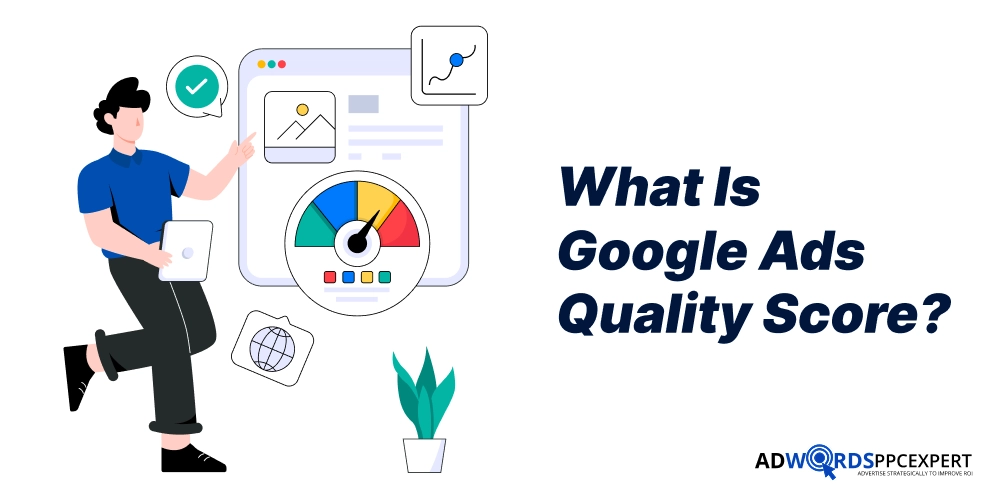
Quality Score in Google Ads is an internal measure that is aimed at providing advertisers with a kind of estimation of the competition between their ads’ quality and the quality of other competitors who also use the same keywords in their advertisements. It is measured on a scale of 1 to 10, and it is calculated based on the performance record of the advertisement in relation to an exact match for a specific keyword.
According to Google’s document about Ads, several key factors affect Quality Score:
- Expected click-through rate (eCTR): it refers to the possibility of people clicking on your ad if it was displayed as a result of a particular keyword.
- Ad relevance: it refers to the extent to which your ad's message corresponds to the intentions of the users.
- Landing page experience: it measures the alignment, clarity, and mobility of the landing page after clicking on your ad.
Important Diagnostic Clarifications
It is equally critical to understand what Quality Score is NOT:
- Quality Score ≠ Ad Rank: The Quality Score is a composite measure. Ad Rank—the factor that dictates where your ad shows up—is determined on-the-spot in each auction based on your bid, auction-time Quality Score indicators (which include the user’s location, device, and context), thresholds for Ad Rank, competition, and the ad’s expected impact.
- Quality Score ≠ Conversion Rate: If you have a good score, it indicates that your search asset is relevant to the query; however, it does not indicate that the visitor will complete a form or contact your business.
- Quality Score ≠ Campaign Profits: While an advertiser might get a quality score of 9/10 on a cheap and low intent keyword, if the visitors do not convert into customers, the campaign is unsuccessful.
Quality Score Component |
What It Measures |
How Advertisers Can Improve It |
|---|---|---|
| Expected CTR | Expected probability of a click based on historical query matching | Write compelling headlines, use strong CTAs, and add relevant ad assets |
| Ad Relevance | Match between search query intent and headline and description text | Build tight, intent-focused keyword groups and reflect key query concepts in the ad copy |
| Landing Page Experience | Utility, clarity, load speed, and relevance of the landing page after the click | Maintain direct message match, fast loading speeds, simple contact forms, and mobile responsiveness |
Why Quality Score Matters for Local Lead Generation
In high-cost local industries like emergency plumbing, drain cleaning, or sewer repairs, cost-per-click (CPC) bids can quickly spiral upward. When multiple plumbing companies compete for the same service keywords in metro Detroit, Google relies on auction-time relevance signals to maintain a positive search experience.
The Local Conversion Path
User Search Intent ➔ Targeted Keyword ➔ Relevant Ad Copy ➔ Dedicated Landing Page ➔ Booked Lead
Example: Generic Bidding vs. Intent-Matched Bidding
Let us try to understand generic bidding versus intent-based bidding using an example.
- Unoptimized Process: A person searching for an 'emergency plumber near me' in Detroit sees a general headline, 'Professional Plumbing Services – Quality Work,' and goes onto a generic homepage which talks about all commercial services offered. The lack of sense of urgency lowers expected CTR, and Ad Relevance is medium, while Landing Page Experience is low, and the visitor returns to Search.
- Optimized Process: A person searching for 'emergency plumber near me' in Detroit clicks on a headline that says, '24/7 Emergency Plumber Detroit | Fast Local Response,' and is taken directly to a mobile-optimized emergency plumbing page with a one-touch call-to-action button. Ad Relevance is high, and Landing Page Experience is high, while CPA is low.
The Detroit Plumbing Campaign: Where Things Started
Before restructuring, Delta Plumbing was facing some typical PPC constraints in the local sphere. Working in the highly competitive Detroit metro area, the account was spending its budget on clicks that weren’t driving valuable leads.
What the account needed wasn’t more budget – there was plenty of demand in the metro Detroit region for people’s need for quick drain cleaning, well maintenance, and pipe repairs. What it needed was restructuring. Low historical ad relevance had caused Google to raise the CPCs in order for the account to have a good position, resulting in a high CPA of >$100 per lead.
There was no way to just increase the budget and make things work. It needed to be rebuilt from scratch.
The Core Optimization Strategy
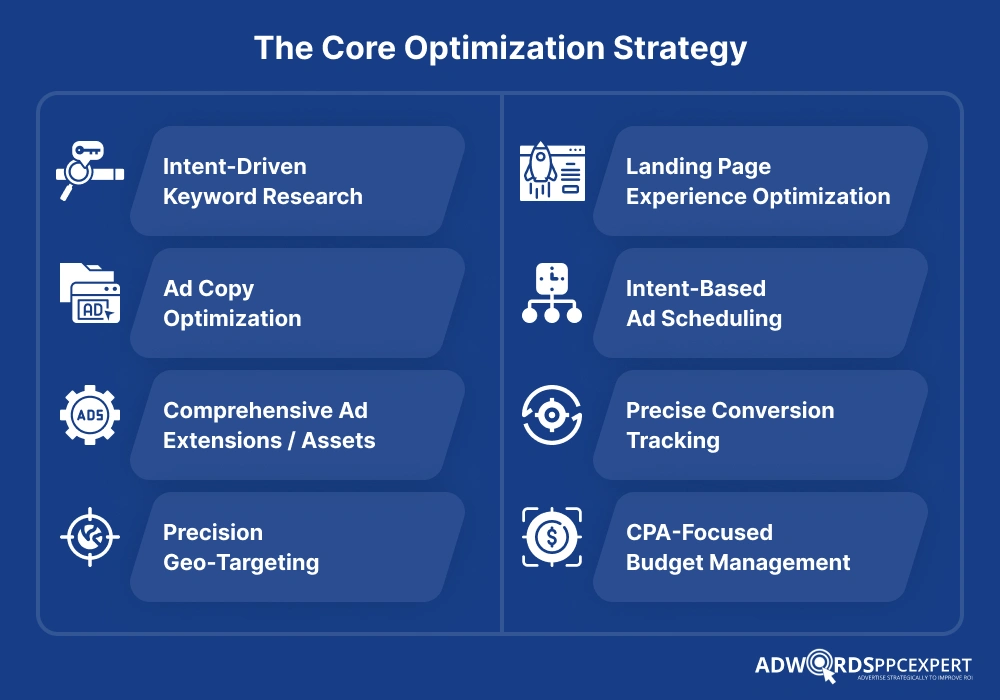
To transform Delta Plumbing’s Google Ads account, we implemented an eight-point PPC restructuring plan focused on capturing high-intent local buyers in Detroit.
1. Intent-Driven Keyword Research
Instead of targeting broad informational terms like ‘plumbing tips’ or generic broad-match terms like ‘pipes,’ we pruned the account to isolate high-intent, immediate-need local queries.
The primary revenue drivers for the optimized campaign focused on six top-converting keyword categories:
- plumbers near me
- drain cleaning near me
- gas line installation near me
- well repair near me
- emergency plumber near me
- plumbing companies near me
By grouping these keywords into hyper-focused, service-specific ad groups, we ensured that every keyword matched the searcher’s specific physical location and immediate service need.
2. Ad Copy Optimization
Ad messaging was rewritten to directly mirror the user’s explicit query intent. We replaced generic corporate statements with localized urgency, upfront value propositions, and strong calls-to-action.
- Unoptimized Concept: Top Rated Plumbing Services | Call Us Today
- Optimized Local Alignment Concept: 24/7 Emergency Plumber Detroit | Fast Response & Upfront Pricing
3. Comprehensive Ad Extensions / Assets
We fully implemented Google Ads assets (formerly referred to as ad extensions) across all active campaigns to maximize physical real estate on the Search Result Page (SERP) and provide actionable paths to contact:
- Call Assets: Direct phone number displays for immediate mobile dialing.
- Sitelink Assets: Direct links to specific service sub-pages like Drain Cleaning, Water Heater Repair, and Well Pump Repair.
- Callout Assets: Highlighting trust signals such as '24/7 Emergency Service,' 'Upfront Pricing,' and 'Licensed Master Plumbers.'
- Structured Snippets: Categorizing offered services (e.g., Services: Drain Cleaning, Gas Lines, Well Repair).
4. Precision Geo-Targeting
A major contributor to wasted spend in local PPC is broad geographical leakage. We restricted the account’s location settings strictly to the active Detroit service territory and surrounding metro coverage areas (such as Macomb and Oakland Counties). Location intent settings were set to ‘Presence: People in or regularly in your targeted locations’ to prevent out-of-state clicks from individuals looking up plumbing advice.
5. Intent-Based Ad Scheduling
Emergency plumbing requests happen around the clock, but routine service inquiries require prompt staff phone responses. We analyzed hourly conversion patterns and adjusted ad schedules to concentrate aggressive bidding during hours when Delta Plumbing’s dispatch team could answer calls instantly, reducing missed-call drop-offs.
6. Landing Page Experience Optimization
Traffic was directed away from the general homepage and routed toward service-matched, highly responsive landing pages. Key landing page improvements included:
- Message Match: The headline on the landing page mirrored the exact offer in the clicked ad.
- Frictionless Mobile UX: Clear click-to-call buttons fixed at the top of mobile viewports.
- Trust & Transparency: Displaying licensing badges, customer reviews, and clear indications of local Detroit service.
7. Precise Conversion Tracking
Without clean tracking, optimizing for Quality Score or CPA is impossible. We verified and configured primary conversion actions for:
- 1. Dynamic call tracking for phone calls generated directly from ad assets.
- 2. On-site phone call clicks from mobile landing page visitors.
- 3. Completed contact form submissions for routine service requests.
8. CPA-Focused Budget Management
Instead of spreading budget thin across hundreds of low-intent keywords, we consolidated daily ad spend into the top-performing ad groups. Budget was dynamically reallocated toward high-converting search queries that demonstrated lower acquisition costs.
Breakdown of Top-Converting Keywords
The success of the Delta Plumbing campaign relied heavily on matching search intent with immediate local service availability. Below is a strategic breakdown of the core search queries that powered the campaign’s lead volume:
Top Converting Keyword |
Search Intent Category |
Why It Matters for a Local Plumbing Campaign |
|---|---|---|
| plumbers near me | High Intent / High Urgency | Captures nearby residents actively seeking immediate local plumbing help. |
| drain cleaning near me | Specific Service Urgency | Targets homeowners experiencing active clogs who need professional drain-cleaning services. |
| gas line installation near me | High-Value Specialty Service | Attracts customers looking for profitable gas line installation and repair services. |
| well repair near me | Specialized Regional Need | Reaches homeowners in suburban and rural areas who need urgent water-system repairs. |
| emergency plumber near me | Critical Immediate Need | Targets searchers who need immediate plumbing assistance and 24/7 service. |
| plumbing companies near me | Commercial & Residential Intent | Reaches homeowners and property managers comparing established local plumbing contractors. |
How Practical Optimizations Influence Quality Score Components
While our operational goal was lowering lead costs, each strategic adjustment directly reinforced the core diagnostic components of Google Ads Quality Score:
Optimization Performed |
Expected CTR Impact |
Ad Relevance Impact |
Landing Page Experience Impact |
|---|---|---|---|
| High-Intent Keyword Selection | ✓ | ✓ | |
| Service-Specific Ad Headlines | ✓ | ✓ | |
| Call & Sitelink Asset Deployment | ✓ | ||
| Geo-Targeting to Detroit Metro | ✓ | ✓ | |
| Dedicated Service Landing Pages | ✓ | ||
| Conversion Tracking Configuration | (Indirect Strategy) | (Indirect Strategy) | (Indirect Strategy) |
Campaign Results: Scaling to 80+ Leads at a $26 CPA
By aligning search intent, ad copy, location targeting, and landing page usability, Delta Plumbing achieved a dramatic shift in account economics over the 3-month campaign window.
Campaign Metric |
Baseline (Pre-Optimization) |
Optimized Campaign (3-Month Duration) |
|---|---|---|
| Total Lead Volume | ~20 leads | 80+ leads |
| Cost Per Acquisition (CPA) | >$100 per lead | $26 per lead |
| Lead Quality Benchmark | Low / Unqualified inquiries | High / Qualified local service requests |
| Primary Traffic Source | Generic broad search | Hyper-local intent search queries |
| Target Service Location | Detroit Metro Region | Detroit, Macomb & Oakland County Areas |
By focusing on user intent and structural relevance, the campaign unlocked at least four times the lead volume while cutting customer acquisition costs by over three-quarters.
Frequently Asked Questions (FAQ)
1. What is Google Ads Quality Score?
Quality Score is a 1-10 scale metric showing how relevant your keywords, ad, and landing pages are for users seeing your ads.
2. What is a good Quality Score in Google Ads?
If you work with branded and commercial keywords, the optimal Quality Score range would be 7-10. However, if you use local service non-branded keywords, you can make money out of Quality Scores from 5-7, assuming that you optimized conversion tracking and landing pages’ intention.
3. What are the three elements of Quality Score?
There are three basic elements of Quality Score: Expected Click-Through Rate (eCTR), Ad Relevance, and Landing Page Experience.
4. How can I improve my Google Ads Quality Score?
In order to improve Quality Score, you will have to create ad groups and write ad copy according to the user’s intent, use extensions such as calls and sitelinks, and drive your traffic to fast and mobile-friendly landing pages.
5. Does Quality Score affect CPA?
Indirectly, it does. The higher your Quality Score, the lower CPC you will need in order to get the top ad rank. With lower CPC, you will need less money to attract clicks, which means lower CPA.
Conclusion
Quality Score in Google Ads is an important diagnostic metric, but real campaign success lies in the ability of your pay-per-click strategy to convert ad relevance into conversions. As we have seen in the example of Delta Plumbing, higher bids or targeting general keywords always result in inflated acquisition costs and wastage of money in ad spend.
By moving the attention from vanity metrics and adopting a more focused approach by using a hyper-local and intent-based model that includes precise keyword grouping, ad copy aligned with the message, geo-targeting, and mobile-friendly landing pages, companies can greatly increase account efficiency. Not only will this alignment positively affect diagnostics such as CTR and Ad Relevance, but it will accomplish the final objective: reduce CPA.

Ami Singh is a highly skilled AdWords PPC Specialist, known for creating profitable Google Ads strategies that elevate brands. With deep expertise in Google Search, Display, Shopping, YouTube Ads, and advanced bidding techniques, Ami consistently converts data into performance-driven results.
With a sharp analytical mind and a strong understanding of online consumer behavior, Ami designs campaigns that maximize ROI, boost quality scores, and reduce acquisition costs. His approach blends technical expertise with strategic thinking—making him a go-to expert for businesses aiming to dominate Google Ads.
Ami doesn’t just adapt to the fast-changing PPC industry, but he also stays ahead of the curve by testing new features, adopting automation smartly, and refining what works. Clients trust him for his transparency, insights, and ability to scale campaigns sustainably.
Looking to take your Google AdWords performance to the next level? Connect with Ami Singh at Softtrix and discover how he can help you get the maximum growth through powerful PPC strategies.